
 by
by Okay, so check this out—I’ve been poking around different browser wallets for a few years now, and Rabby kept popping up in conversations. Wow! At first glance it looks like another extension. But then there were a few small features that made me pause. My instinct said: maybe this one’s different. Seriously? Yes. I dug in, tested it across a couple of chains and dApps, and got both pleasantly surprised and mildly annoyed in equal measure.
Here’s the thing. Browser wallets are the front door to your crypto life. If that door squeaks, or worse, opens for the wrong person—you’re cooked. Rabby aims to be that front door but with a sturdier hinge and a doorknob you actually understand how to use. Some parts feel polished. Some parts feel like they were rushed in a sprint-release. Still… overall it’s worth considering if you handle DeFi frequently and need multi‑chain coverage without too much fuss.
Let me walk you through what I noticed—warts and all—so you can decide whether Rabby fits your workflow. Initially I thought it was just another MetaMask competitor, but then I realized it brings some practical UX and safety-minded touches that matter day-to-day. And yeah, I’m biased toward tools that reduce stupid human error.
Quick overview — what Rabby does well
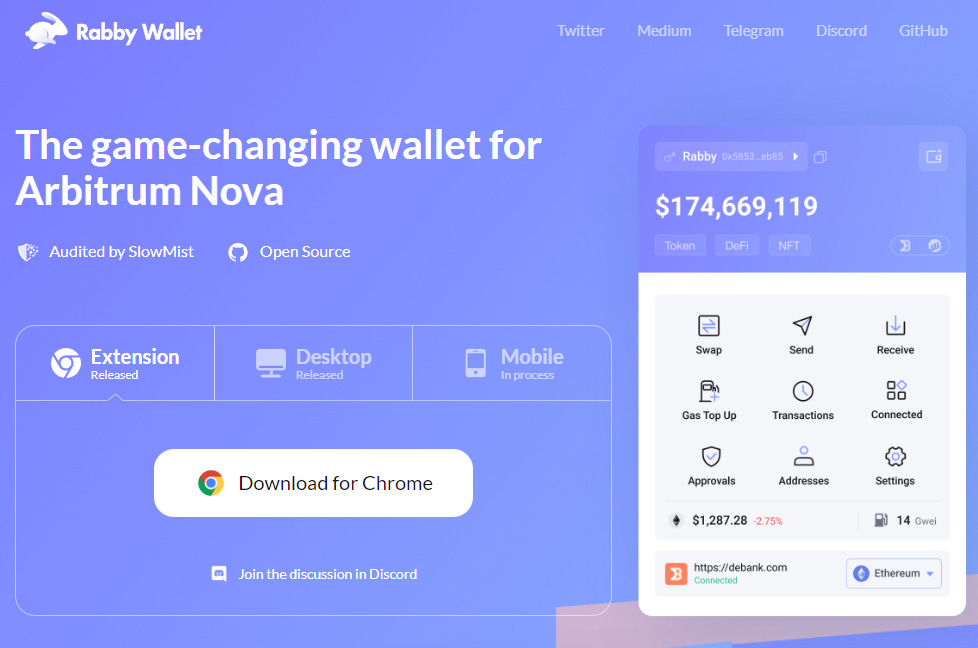
Rabby is a browser extension multi‑chain wallet that supports common EVM chains like Ethereum, Polygon, BSC and friends. It surfaces transaction details in a more human-readable way than a raw hex dump, which is handy. Hmm… simple but impactful. The extension tries to isolate dApp permissions and make transaction impacts clearer before you hit confirm. On my end, that reduced the number of accidental approvals I made while testing. Seriously—fewer facepalms.
It also aims to be developer-friendly without confusing users. The onboarding felt familiar if you’ve used other wallets; there’s a quick account setup, network switching, and token imports. Initially I thought the token management would be clunky, but actually, wait—it’s surprisingly tolerable even with a long token list. Though I will say some UI elements could use more spacing on smaller screens.
In plain terms: Rabby focuses on clarity (for transactions), multi‑chain convenience, and a few guardrails that stop dumb mistakes. If you interact with multiple chains often, that convenience compounds.
Security posture — practical, not magical
Security is where wallets get judged—and judged harshly. Rabby isn’t a cold wallet. It’s a hot browser extension. That means you should treat it like a powered-on phone: useful, but at risk if mishandled. My quick take: Rabby adds meaningful UX-level protections that help stop common attack patterns, but it can’t replace basic hygiene (seed backups, hardware keys for big bags, etc.).
For example, the transaction preview tries to break down complex calls into readable pieces—so you can see what tokens are being moved, what contract calls do, and whether you’re approving allowance changes. That helps to catch weird approvals. On the flip side, if a malicious dApp obfuscates intent cleverly, you still need to be vigilant—this is not foolproof. On one hand it gives you more information; on the other hand, more information can sometimes confuse people who just want to click “confirm” and be done.
My instinct said the simulation and safety layers would be perfect; though actually I found edge cases where the preview wasn’t crystal-clear for highly nested contract interactions. Something felt off about one multi-call I tested (oh, and by the way… I reported that). Rabby updates fairly often, so expect iterative fixes rather than a one-and-done product.
Daily use: UX, multi‑chain flow, and swaps
Using Rabby day-to-day is pleasant. Switching chains takes one click. Medium-length thought: the network list is accessible without diving into settings, which is great when you bounce between testnets and mainnets because you’re doing yield farming, bridging, and random token hunts. Long thought: the fewer clicks and less cognitive load you have while approving transactions, the fewer chances for error—so a wallet that streamlines common tasks is a subtle safety improvement, even if it isn’t a formal security control.
Rabby also integrates common DeFi patterns like in-extension swaps or routing to aggregators in some releases. I used the built-in swap once to move a small test amount and the quotes were competitive, though slippage and aggregator routing still depend on on-chain liquidity and timing. Don’t treat in-extension swaps as cheaper or safer automatically—compare prices, compare gas, and maybe do a small test tx first.
Oh—and it supports connecting hardware wallets for key management on many flows. That’s huge. If you’re handling larger balances, pair Rabby with a Ledger or similar device and you get convenience plus a hardware layer. I’m not 100% sure every hardware model is supported in every scenario, so check compatibility for your setup before moving big funds.
Installation and first impressions — where to get it
If you want to try it, grab it from an official source and verify you’re installing the correct extension. For a straightforward start, here’s a place to download: rabby wallet download. Short sentence: be careful. Medium thought: always verify the extension ID or publisher and avoid random links in forums. Long sentence with a caveat: browser ecosystems change, malicious copies exist, and sometimes a fake extension surfaces, so double-check the publisher, reviews, and install count before trusting any wallet you download.
Installation took a couple of minutes. I set up a throwaway account for testing, imported a small seed-derived test profile, and connected to a few dApps. The permission prompts felt clearer than many alternatives, though I did crank my head a bit on one contract method that didn’t have a friendly label. Expect to read a little—don’t just click through. Seriously.
Where Rabby shines, and where it still misses
Pros: clearer transaction previews, smooth multi‑chain switching, hardware wallet support, and a design that nudges you to think before approving. Cons: occasionally fuzzy previews for complex multicalls, minor UI polish issues, and the ever-present need to vet the extension source. I’m biased toward clarity; this part really appeals to me. This part bugs me: sometimes you need to dig into raw data to confirm behavior, which undercuts the “easy for everyone” pitch.
Also, the ecosystem refreshes fast—features appear, then change, then come back. It’s a living product. That means you’ll see improvements, and also you’ll hit hiccups. If you like beta-energy, great. If you want rock-solid, conservative tooling, pair Rabby with hardware keys and conservative habits.
FAQ
Is Rabby safer than MetaMask?
It depends. Rabby emphasizes clearer transaction previews and permission management, which helps prevent common mistakes, so in that sense it’s “safer” for day-to-day DeFi interactions. But both are browser extensions and share hot-wallet risk profiles. For large sums, use a hardware wallet.
Can I use Rabby with Ledger or other hardware wallets?
Yes—Rabby supports hardware wallet connections for signing when available, which is the recommended pattern for higher-value accounts. Check current compatibility for your specific device model before moving large amounts.
What should I watch out for when using Rabby?
Watch out for fake extensions, vague approvals, and complex multi-call transactions that hide side-effects. Always verify the extension source, test with tiny amounts, and consider using separate accounts for approvals versus holding funds long-term.
